NASA Astronaut Photo Reveals Striking Land Bridge Separating Colorful Patagonian Lakes — What You Need to Know
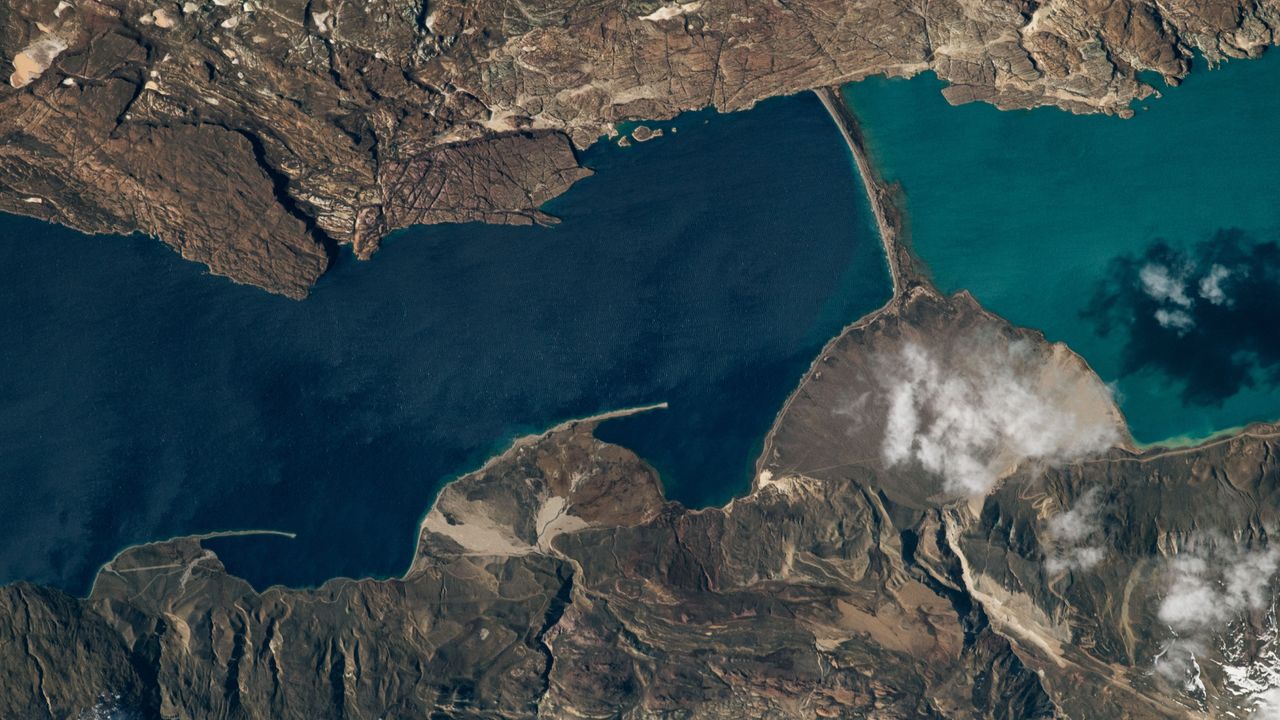
A striking 2020 image captured by an astronaut aboard the International Space Station reveals a rare geological phenomenon in Patagonia: two vividly colored lakes—Lago General Carrera and Lago Pueyrredón—divided by a narrow, winding land bridge. The lakes, located in the remote Andes mountain range along the Chile-Argentina border, display contrasting hues due to differing mineral content and sediment levels, with Lago General Carrera appearing deep blue and Lago Pueyrredón showing a turquoise tint. Scientists believe the separation occurred gradually as glacial retreat and shifting tectonic forces reshaped the landscape over millennia. The visual contrast is not just scenic—it underscores broader environmental changes in one of Earth’s most pristine regions. As climate change accelerates glacial melting across Patagonia, such landforms may become more dynamic, altering water flow and ecosystem balance. Researchers from institutions like the Chilean National Antarctic Institute and Argentina’s Instituto Nacional de Investigación y Desarrollo Pesquero are monitoring these shifts closely, using satellite data and field studies to track ecological impacts. This natural marvel, visible only from space, serves as a reminder of Earth’s ever-changing surface and the importance of preserving fragile high-altitude ecosystems. With rising global temperatures, understanding such transitions becomes critical for conservation and climate resilience planning.