How Ancient Star Collisions Explain Mysterious Little Red Dots and Supermassive Black Hole Growth
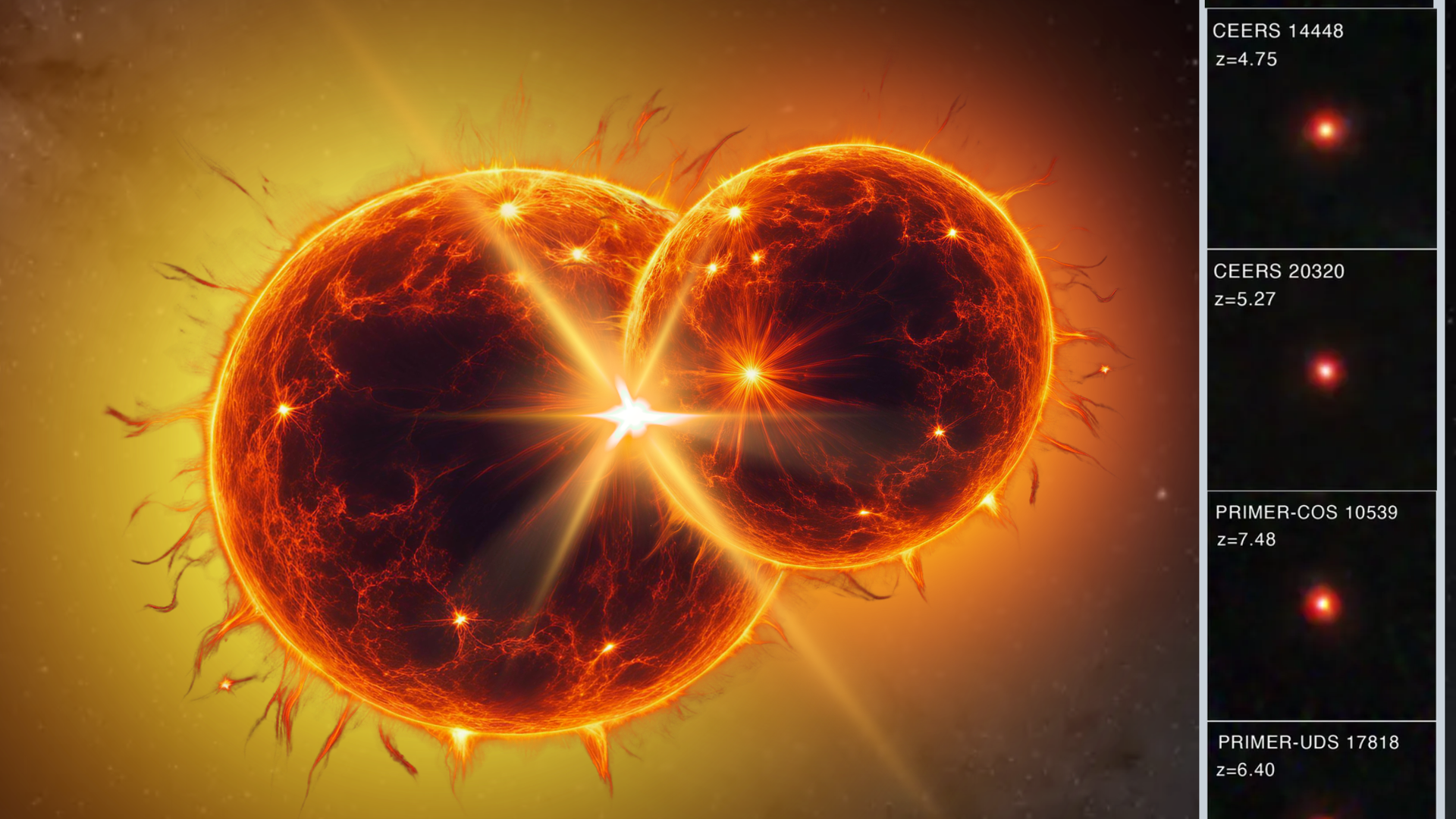
New research suggests that collisions between stars in the early universe may have been surprisingly common, potentially solving two major cosmic mysteries: the rapid growth of supermassive black holes and the nature of the enigmatic 'Little Red Dots' spotted by the James Webb Space Telescope (JWST). These frequent stellar smash-ups could have provided the dense material needed to form massive black hole seeds, which then grew into the behemoths we observe at the centers of galaxies. The study, published in a leading astrophysics journal, indicates that such collisions were far more likely in the crowded, chaotic environments of young galaxies, where stars were packed tightly together. This process could explain how black holes reached masses billions of times that of the sun so early in cosmic history, a puzzle that has challenged the standard model of black hole growth. Additionally, the intense radiation from these collision-driven black holes might account for the unusual red glow of the Little Red Dots, which appear as compact, reddish objects in JWST images from the first billion years after the Big Bang. The findings offer a unified explanation for these phenomena and highlight the violent, dynamic nature of the early universe. As the JWST continues to peer deeper into cosmic dawn, astronomers may find more evidence linking stellar collisions to the birth of the universe's most massive objects.