Ghostly 'Shrine Maiden' Statue Found at 1,500-Year-Old Japanese Burial Mound
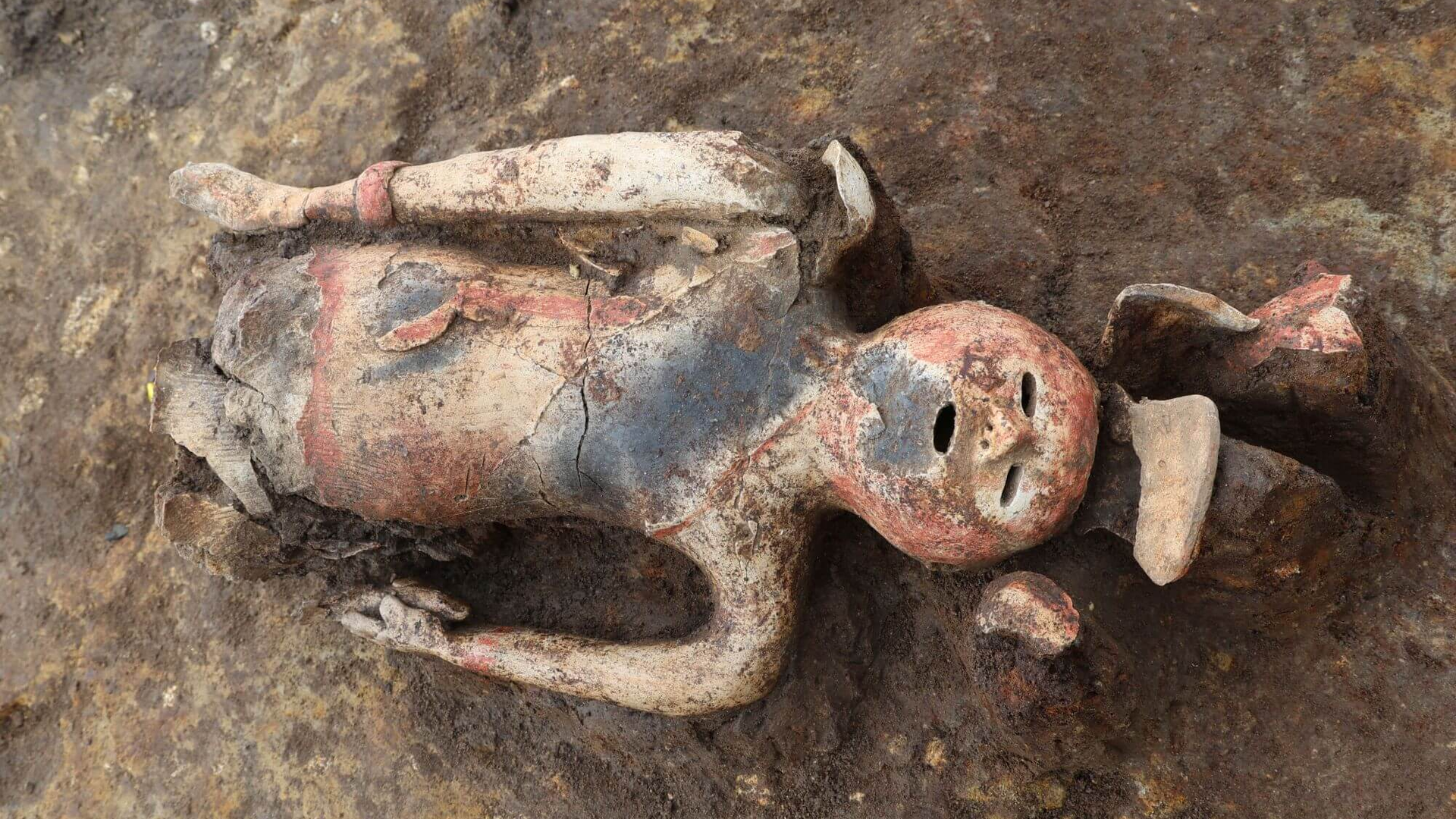
Archaeologists in Japan have uncovered a rare human-shaped funeral offering at a 1,500-year-old burial mound, believed to depict an ancient priestess. The clay statue, known as a haniwa, was found at the site in the city of Habikino, Osaka Prefecture, and stands about 3.5 feet tall. Its distinctive headdress and clothing suggest it represents a female ritual specialist, possibly a shrine maiden, offering new insight into the spiritual roles of women in Japan's Kofun period (c. 250–538 AD). The discovery is significant because haniwa depicting specific individuals, especially women in ceremonial attire, are extremely uncommon. Researchers say the figure's detailed carving—including facial features, hair, and garments—will help scholars better understand the funerary practices and social hierarchy of ancient Japan. The statue was found in the moat of a large keyhole-shaped tomb, a design reserved for high-ranking elites, indicating the priestess held considerable status. As excavations continue, experts hope to find additional artifacts that clarify the relationship between the buried individual and the ritual objects placed around the mound. This find not only enriches the historical record but also underscores the enduring mystery of Japan's ancient burial traditions.