Curiosity Rover Captures Mysterious 'Footprints' on Mars: What Scientists Are Now Investigating
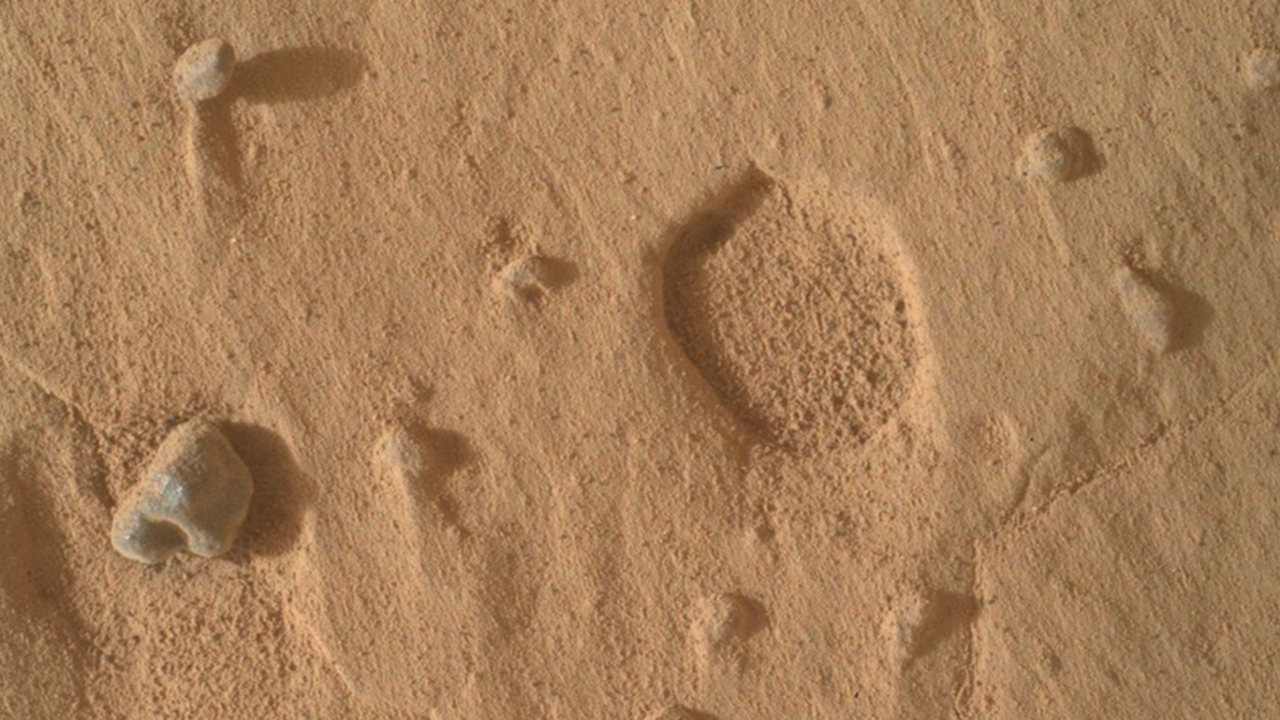
NASA’s Curiosity rover has detected unusual surface features on Mars that resemble strange, repetitive patterns resembling footprints—marking a rare and unexplained anomaly in the rover’s six-year exploration of Gale Crater. The discovery was first noted by lead scientist Dr. Sarah Chen during a routine assessment of the rover’s latest workspace, where she remarked, “Both of our workspaces this week contained features unlike quite anything we have seen in the past.” These formations, measuring approximately 15 to 20 centimeters in length and spaced at irregular intervals, appear etched into the fine-grained sediment near the base of Mount Sharp. While initial hypotheses include wind erosion, ancient hydrological activity, or even subsurface ice movement, no definitive explanation has yet emerged. The findings are significant because they challenge existing models of Martian surface dynamics and underscore the planet’s still-mysterious geological history. As data from Curiosity continues to stream back to mission control at NASA’s Jet Propulsion Laboratory in Pasadena, California, researchers are preparing targeted imaging and chemical analysis to determine whether these marks are natural or indicative of previously unknown processes. The mystery deepens as scientists race to decode what may be one of Mars’ most intriguing enigmas yet—offering fresh insight into the Red Planet’s hidden past and future exploration priorities.