Astronomers Detect Unprecedented Gamma-Ray Burst Duo Erupting 4 Minutes Apart
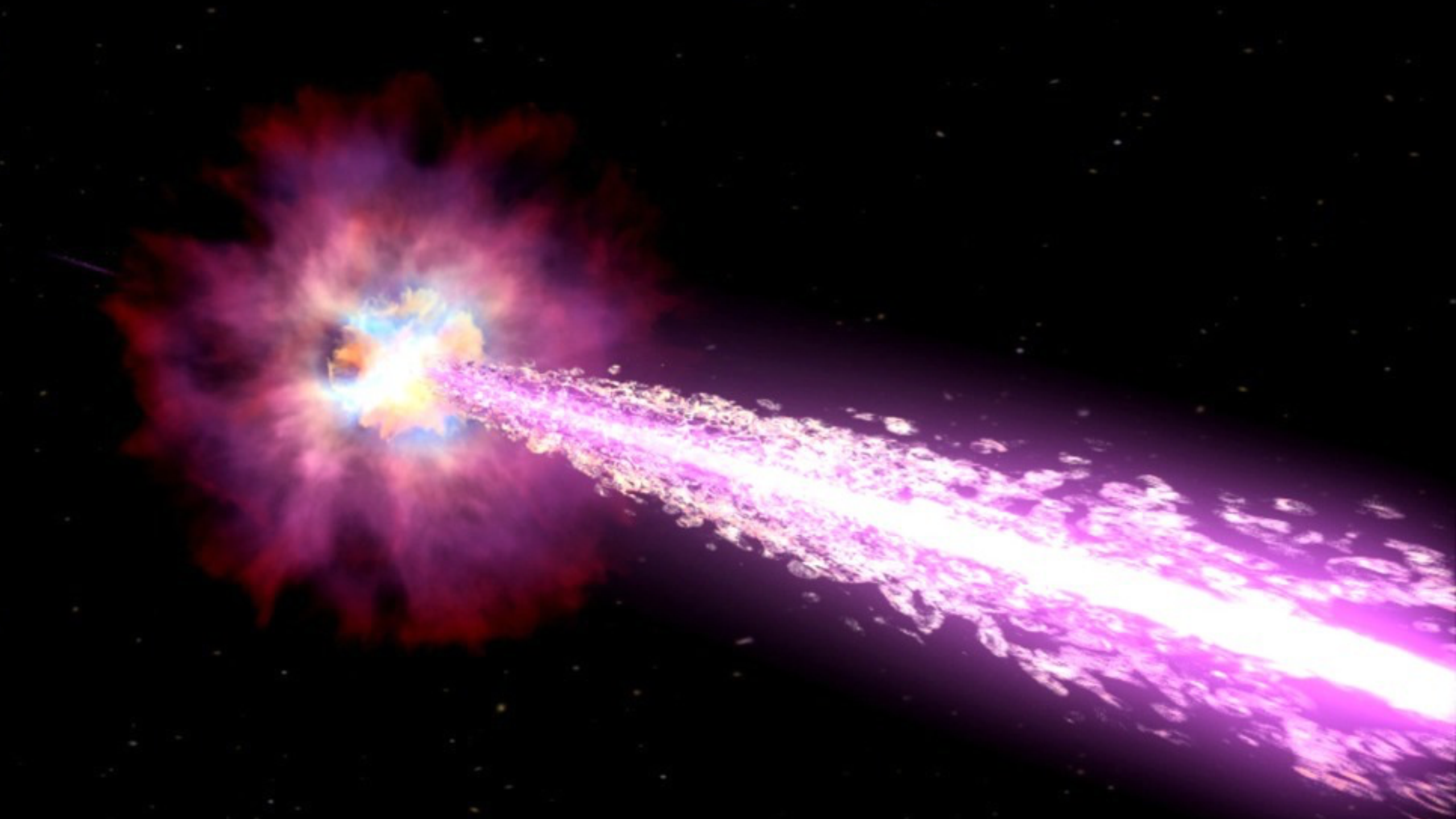
In a discovery that challenges current astrophysical models, astronomers have observed two distinct types of gamma-ray bursts (GRBs) erupting from the same region of space just four minutes apart. The findings, reported by ScienceAlert, describe an event unlike any previously recorded, with one burst exhibiting characteristics of a long-duration GRB and the other matching a short-duration GRB. This dual event, detected by NASA's Neil Gehrels Swift Observatory and other instruments, has left researchers puzzled, as the two phenomena are typically associated with different cosmic origins: long GRBs with collapsing massive stars and short GRBs with neutron star mergers. The proximity in time and location suggests a possible common source or a rare coincidence, prompting a reevaluation of how these powerful explosions are classified. The event, designated GRB 211211A, was located in a galaxy about 1.1 billion light-years away, making it relatively nearby in cosmic terms. Scientists are now poring over data to understand the mechanisms that could produce such a rapid succession of disparate bursts. This unprecedented observation could open new avenues in the study of stellar deaths and compact object mergers, offering a unique window into the most energetic events in the universe. As researchers continue to analyze the data, this event may redefine our understanding of gamma-ray burst progenitors and their diversity.