Saturn's Titan: Oily Oceans May Host Slow-Motion Waves, Scientists Reveal
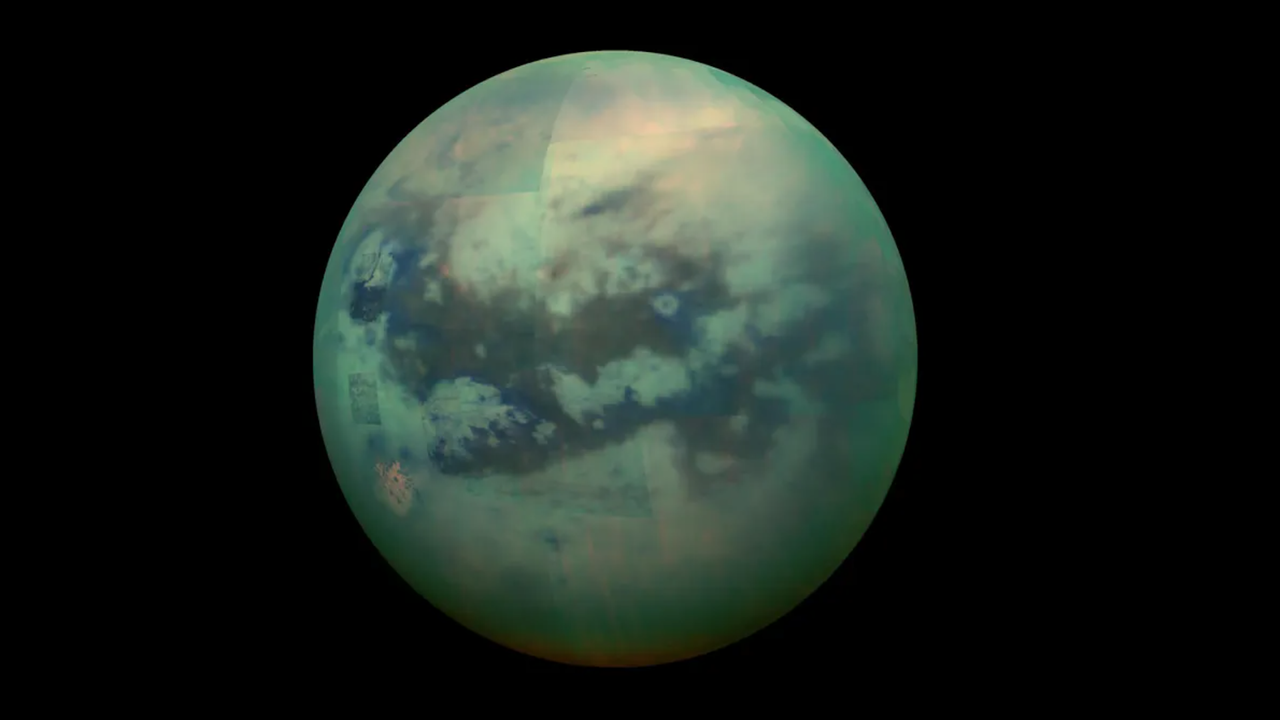
Saturn's largest moon, Titan, features vast seas of liquid methane and ethane. New research suggests that waves on these hydrocarbon bodies may move with a unique, slow-motion characteristic, unlike Earth's water waves. This phenomenon is attributed to the moon's lower gravity and the distinct properties of its surface liquids, particularly their weaker surface tension compared to water. The reduced gravitational pull on Titan, about one-seventh of Earth's, lessens its ability to flatten disturbances. Simultaneously, the lower surface tension of methane and ethane means that even small ripples propagate sluggishly, influenced more by the liquid's inertia. This 'slow-motion' effect has significant implications for understanding Titan's surface dynamics, erosion processes, and for planning future exploration missions, such as the Dragonfly rotorcraft. The study highlights how the interplay of gravity and liquid composition dictates wave behavior across celestial bodies, offering insights into planetary science and the potential for liquid landscapes beyond Earth.